State Police open investigation into municipal finances in Woodstock

Nine candidates running for three Windsor County state Senate seats
Appeals Court says federal court lacked jurisdiction to release Mahdawi from immigration detention

Vondell-Cobb property conservation fundraising campaign nears its $400K goal
The community is invited to the GMHA Centennial Celebration next weekend
To beat the heat… our area offers plenty of spots where you can enjoy the water
Vermont Creemee Passport turns summer joy into statewide giving

In a unique collaborative venture, The Woodland Fairy opens new location in Woodstock
News
July 23
1:00 am
State Police open investigation into municipal finances in Woodstock
The Vermont State Police has opened an investigation into the possible unapproved transfer of taxpayer funds from the Town of Woodstock to the Village of Woodstock to help pay for legal fees surrounding the demotion of former Police Chief Joe Swanson, the Vermont Standard has learned.
“The Vermont State Police can confirm an investigation is underway regarding an allegation of possible financial improprieties involving the Village of Woodstock,” said Adam Silverman, chief spokesman for the VSP.
“The complaint initially was made to the Woodstock Police Department, which consulted with the Windsor County State’s Attorney’s Office due to a potential conflict of interest. The complaint then was referred to VSP’s Bureau of Criminal Investigations, which is standard protocol,” Silverman told the Vermont Standard on Tuesday afternoon.
Interim Village Police Chief Chris O’Keeffe confirmed that his department received two independent complaints a few days apart from local residents concerning financial issues.
Among the people who could be potential witnesses are municipal manager Eric Duffy and the village trustees, who both have oversight of the Woodstock Police Department. Also, selectboard members for the town could be interviewed about the transfer of their municipal funds to the village.
Attempts by the Vermont Standard to reach Duffy for a public comment were unsuccessful.
Duffy reportedly is on vacation this week, and chief of staff Stephanie Appelfeller and Fire Chief David Green were fielding calls for the manager. Both were asked for a comment by the Vermont Standard, but neither responded by the Wednesday morning deadline.
O’Keeffe said the complaints were nothing he would or could investigate if his own boss was involved.
The selectboard and Duffy are expected to continue discussion about the legal costs during a public meeting at 6 p.m. Monday.
The board agreed at its July 7 meeting that the village administration would provide the board by Sunday the financial reports concerning the legal costs. The selectboard said it had a firm expectation that no extension would be entertained, according to the meeting minutes.
Attorney General Charity Clark did not respond to phone calls, texts, or email messages from the Vermont Standard this week.
Silverman said upon receiving the referral, “Vermont State Police assigned detectives and initiated an investigation to determine whether any wrongdoing or misconduct had taken place.”
He said the state police “formally opened the investigation on July 10, and it remains active and ongoing.”
For more on this, please see our July 23 edition of the Vermont Standard.
July 22
11:29 pm
Appeals Court says federal court lacked jurisdiction to release Mahdawi from immigration detention
In a Tuesday, July 21 press release, the ACLU of Vermont announced that the U.S. Court of Appeals for the Second Circuit has overturned a ruling that determined federal courts have jurisdiction when immigration enforcement detains noncitizens in retaliation for their protected speech. The Second Circuit held that the district court lacked the authority to release Columbia University graduate student Mohsen Mahdawi on bail in April 2025 after he was detained at his citizenship interview and held for over two weeks in retaliation for his advocacy in support of Palestinian rights.
The decision does not go into effect immediately and the government has no lawful basis to redetain or deport Mahdawi as the appeals process proceeds.
“The government is claiming the unprecedented power to detain people for months or even years on end to censor their speech, with no ability to challenge their detention in court. This is as absurd as it is dangerous,” said Michael Tan, deputy director of the ACLU’s Immigrants’ Rights Project, who argued on behalf of Mahdawi last year. “We will continue to fight for our client and for his right to prompt judicial review.”
Earlier this year, immigration judge Nina Froes dismissed the deportation case against Mahdawi on the grounds that the government failed to authenticate a memo purportedly from Marco Rubio that declared him deportable under the “foreign policy ground” of the Immigration and Nationality Act. Froes was subsequently fired from her position as part of the Trump administration’s larger efforts to use the immigration court system to accelerate deportations. In April, after the government appealed that decision, the DOJ-controlled Board of Immigration Appeals held that Mahdawi was removable and remanded proceedings to a new immigration judge, who issued an order of removal last month. Mahdawi’s appeal of that decision is pending.
For more on this, please see our July 23 edition of the Vermont Standard.
July 22
9:55 pm
Vondell-Cobb property conservation fundraising campaign nears its $400K goal
A community campaign to conserve the Vondell-Cobb property in Woodstock has reached $376,000 in pledged contributions, leaving just $24,000 to meet its $400,000 goal.
The campaign received a $100,000 gift last week, according to Mark Harris, a Woodstock resident who has led the fundraising effort with fellow resident Tom Debevoise.
The 358-acre Vondell-Cobb property lies in Woodstock’s northwestern hills and includes forestland, open meadows, recreational trails and a reservoir that holds approximately 28 million gallons of water. The campaign supports the permanent conservation of 323 acres of the town-owned property.
Harris said reaching the $400,000 goal will complete the community’s fundraising commitment toward the conservation transaction.
The Woodstock Rotary Club is serving as the campaign’s charitable partner, providing a way for foundations and donor-advised funds that require a nonprofit recipient to support the conservation effort.
The goal is to have all pledged funds in hand by Aug. 1, although Harris said some payments could arrive shortly afterward because of timing.
With $24,000 remaining, Harris hopes another round of community support will carry the campaign to its goal.
“Let’s get this thing over the finish line,” he said.
Those interested in contributing or learning more about the campaign may contact Harris at [email protected].
For more on this, please see our July 23 edition of the Vermont Standard.
July 22
1:03 pm
Cause of Hartland house fire remains undetermined
By Erin Scott, Staff Writer
A home on Barron Hill Road in Hartland was a total loss after a fire early Wednesday, July 15, but the cause remains undetermined, Hartland Fire Chief Scott Bowers said.
The fire was reported around 5 a.m. after neighbors saw the house burning. The homeowners had been away on vacation for a few weeks. No people or pets were inside.
The call came in as a confirmed structure fire, triggering an automatic first alarm response. Fire departments from Hartland, Windsor, Hartford and Woodstock responded.
Bowers said it took about 15 minutes for the first firefighters to reach the secluded rural property, which was accessible by a network of dirt roads. By the time crews arrived, the house was already largely consumed.
Firefighters initially could not confirm whether the homeowners were inside. A vehicle at the property added to the uncertainty, and neighbors did not know whether the homeowners were home or away.
“My greatest fear was that they were in the house,” Bowers said.
After he was unable to reach the homeowners, Bowers contacted their son, who lives outside Boston. The son confirmed that his parents were vacationing in New Hampshire. Bowers then had to tell him that the family home had been destroyed.
There were no fire hydrants or other water sources at the property, requiring firefighters to establish a rural water hauling operation. Bowers said Woodstock firefighters established a water supply at a dry hydrant near the Taftsville substation, and crews hauled water from there to the fire.
The lack of an on-site water supply added another challenge to a response involving a structure that was already heavily damaged when firefighters arrived. Bowers said it took approximately three hours to extinguish the fire.
The detached garage remained standing, and the vehicle inside was not damaged.
Because the house was a total loss, little physical evidence remained for investigators to determine where or how the fire began. Although the fire occurred during an overnight storm, Bowers said lightning has not been confirmed as the cause.
July 22
12:59 pm
Nine candidates running for three Windsor County state Senate seats
Nine candidates — six Democrats and three Republicans — are vying for their parties’ nods in the upcoming Vermont primary election to seek three seats in the Vermont Senate in the general election on Nov. 3.
Three senators represent 24 Windsor County municipalities and the towns of Thetford in Orange County and Pittsfield in Rutland County in the state Senate, which is comprised of 30 members total, representing Vermont’s 16 senatorial districts. Absentee and early voting for the Senate nods is well underway, with in-person voting by Australian ballot slated for Tuesday, Aug. 11.
To help primary voters learn more about the candidates for the Vermont Senate from the Windsor County/Thetford/Pittsfield district, including their backgrounds, qualifications, and positions on the issues, the Vermont Standard distributed a seven-question survey to each contender last week. Profiles were derived from the candidates’ responses to the survey.
To read the profiles, please see our July 23 edition of the Vermont Standard.
Features
July 22
1:57 pm
Vermont Creemee Passport turns summer joy into statewide giving
At a creemee stand in Bristol, an older woman noticed a display of Vermont Creemee Passports near the counter. She bought one, received her first stamp, and began jumping with excitement.
New Haven, Vt. resident Adam Rice, who created the passport, said the moment gave him goosebumps.
He had expected children to be the project’s most enthusiastic participants, drawn to the challenge of collecting stamps. Instead, adults between the ages of 50 and 69 have become its largest demographic. They are mapping routes, making spreadsheets and traveling across Vermont in search of their next stamp.
Rice created the first passport at the end of March for his father-in-law’s 85th birthday. His father-in-law loves creemees, so Rice gathered gift cards from several stands and placed them in an envelope with a handmade passport.
His father-in-law showed the gift to others so enthusiastically that Rice began wondering whether the idea could become something larger.
The Vermont Creemee Passport went live April 15.
By the time Rice spoke with the Vermont Standard last week, approximately 4,000 passports had reached holders in more than 210 Vermont towns. Eighty-two businesses were participating, with additional stands expected to join.
The booklet contains 20 stamp spaces, and six of the participating businesses are located in our area, which Rice described as the “breadbasket of creemees.” They include Silver Lake Syrups in Barnard; Abracadabra Coffee Co., Farmer and the Bell, White Cottage Snack Bar and Woodstock Scoops in Woodstock; and Sunrise Farm in White River Junction.
Sonya Withington, who owns and operates Silver Lake Syrups with her husband, Eric, said the Barnard business joined because the passport celebrates a Vermont tradition while encouraging people to explore locally owned businesses.
For more on this, please see our July 23 edition of the Vermont Standard.
July 22
12:41 pm
In a unique collaborative venture, The Woodland Fairy opens new location in Woodstock
The Woodland Fairy has expanded with a new, second location and new business partners in Woodstock.
In addition to its bakery in Quechee, The Woodland Fairy is now in its third week operating a breakfast and lunch café on the first floor of 61 Central St. in Woodstock. The Woodland Fairy is leasing the space from developer John Holland and chef and restaurateur Matt Lombard, owner of the fine-dining restaurant Mangalitsa, which had operated on the second floor of 61 Central St. until early 2022, and the bistro Santé, which is currently operating downstairs in conjunction with The Woodland Fairy.
The Woodland Fairy is now operating breakfast and lunch service, with Santé taking over at dinner.
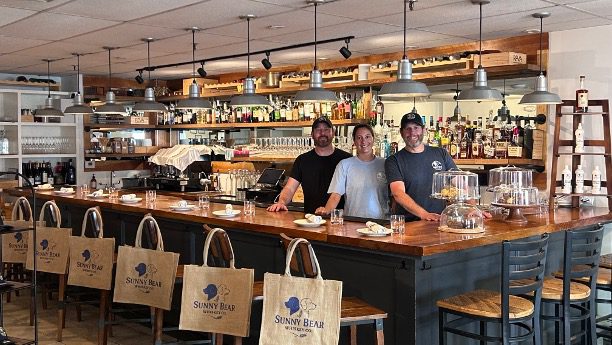
The new venture is a collaborative partnership with whiskey-distilling newcomers Sunny Bear Whiskey Co., which was established in 2025 and just launched its first whiskey this year- along with the whiskey company’s dog rescue-support mission, Sunny Bear Cares. Operating out of the same location, both businesses will sell their wares while also collaborating on products such as whiskey-infused trail mix and baked goods.
The Woodland Fairy co-owners Scott and Kelly Simpson told the Standard this new space allows The Woodland Fairy to continue what they do well, while also offering a sit-down dining experience.
The food shelf that the Simpsons created in their bakery last year — offering day-old bagels and baked goods to anyone in need, no questions asked — is something they plan to set up in their café, as well.
For more on this, please see our July 23 edition of the Vermont Standard.
Sports
July 22
6:46 pm
The community is invited to the GMHA Centennial Celebration next weekend
By Tyler Maheu, Staff Sportswriter
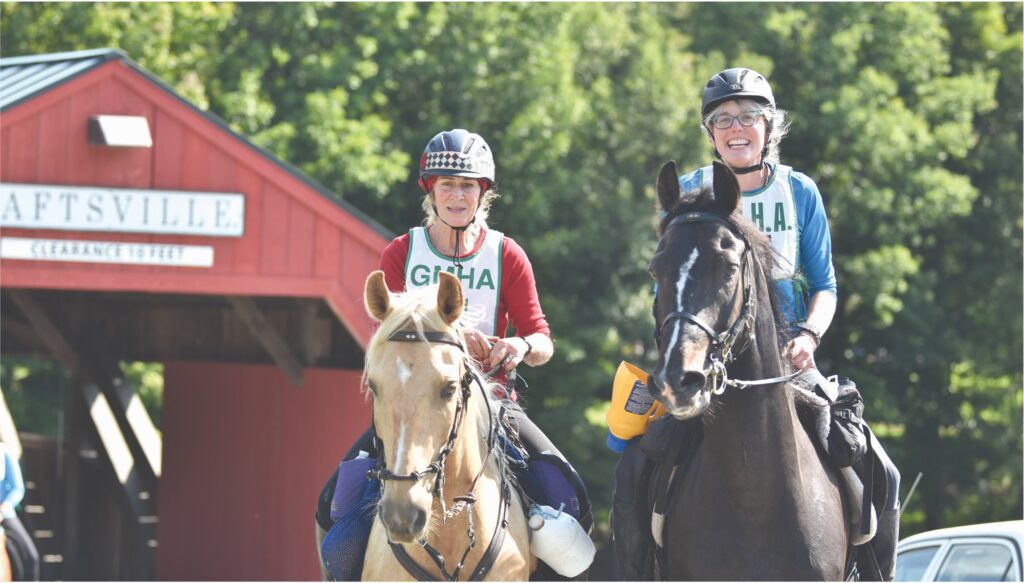
Next Saturday, August 1, the Green Mountain Horse Association will celebrate its 100th anniversary with a weekend full of events.
According to GMHA trail manager Mickey Perry, the celebration is not only for horseback riders, but the community as a whole. “The celebration has been crafted for the whole community, as well as riders past and present, to share stories and the magic of GMHA,” she said. “But also, to acknowledge not only GMHA as an organization, but the landowners and neighbors who generously support and allow our members the ability to enjoy the beauty of Vermont’s landscape on their property — a rarity and extraordinary.”
GMHA provides riders with a facility that serves several different equestrian disciplines, including breed, dressage, driving, eventing, hunter/jumper, and trail (both competitive and pleasure). Perry said the association was founded 100 years ago with a simple mission, “to preserve and celebrate the bond between horse and rider.”
Over the years, GMHA has been a hub for the region’s equestrian community, and it has hosted many large events, including a 100-mile competitive trail ride, which will have its 90th running on Sept. 4.
The Aug. 1 anniversary event will begin at 11:30 a.m. and run until 3 p.m. at the GMHA grounds in South Woodstock. Attendees will be able to enjoy free food from the Squeals on Wheels BBQ food truck. Throughout the afternoon, there will be live music, family-friendly games, and a Hobby Horse Show. According to Perry, the event will be for the region’s “two-legged guests.” Attendees are asked not to bring dogs.
The fun will not stop there, however. From 5-8 p.m., riders will enjoy the Midsummer Twilight ride, which will offer an opportunity to take in the beauty of rural Vermont during the evening’s golden hours.
On Sunday, Aug. 2, equestrians will take part in either a pleasure ride, recreational drive, or an endurance clinic. According to Perry, the endurance clinic has taken inspiration from the recent Vermont 100 endurance ride and is an educational opportunity.
“It’s for riders to learn through a clinic led by the American Endurance Riding Conference guidelines, how to prepare both horse and rider for an endurance ride from the ground up,” she said. Clinicians at the event will include sanctioned endurance ride officials (judges, veterinarians and experienced 100-mile riders). “Following a roundtable discussion, a hands-on vet-inspection/presentation will take place, then riders will take to the trail for a mock ride and final vet inspection with a debrief back on the grounds,” she explained.
The endurance clinic will also feature a lesson on the history and legacy of GMHA’s 100-mile ride. Registration for these Sunday events closed on July 22.
However, guests can still RSVP for the Saturday, Aug. 1 GMHA Community Centennial BBQ & Celebration at https://gmhainc.org..
July 22
6:40 pm
To beat the heat… our area offers plenty of spots where you can enjoy the water
By Tyler Maheu, Staff Sportswriter
With July winding down, August’s heat is on its way. However, our area offers a bevy of locations where you can beat the heat with some water fun.
Starting in Woodstock Village, residents can seek refuge in the cool waters of the Ottaquechee River. Two of the most popular entry points flow past the Woodstock History Center’s lawn and between the Woodstock Recreation Center and Little Theater.
The water near the history center is said to be shallower, and best for those looking to wade. The swimming area in between the rec center and Little Theater features a sandy beach.
In Barnard, of course, you’ll find Silver Lake State Park. Admission is free for children up to three years old, $2 for those four to 13 years of age, and $5 for anyone 14 and up. The park, on the northern shore of Silver Lake, is home to a sandy beach, picnic area, and camping ground. Camping fees are separate from beach access.
Beyond swimming, boating and fishing are also offered at Silver Lake. According to vermont.gov, Silver Lake is a hotspot for smallmouth bass, northern pike, perch, and other warm-water species. Boat rental prices and types of boats may vary.
In Reading, a secluded section of the Black River is a popular swimming hole. Twenty-Foot Hole can be found just over a mile down Tyson Road when coming from the west. Visitors are told to look for a small turnoff along the road for parking, then asked to follow the forested trail down to the river. The small stretch of river features three sets of pools and many small cascades.
Allegedly, the deepest section of the swimming hole was once 20 feet deep, leading to the name. However, over time, the area’s water has become much shallower.
The Windsor Swim Area at Kennedy Pond features a sandy beach and multiple docks, diving boards, and a small play area. Admission to the area is free. Swimmers can go for a dip Monday through Friday from noon to 7 p.m. and from 11 a.m. to 6 p.m. on weekends. Lifeguards are often on duty within the listed hours, and during weekdays from 10 a.m. to noon, swim lessons are available for a fee.
The swim area’s posted rules state that kids need to complete a diving test before using the diving board; those aged 10 and under must be with an adult during lifeguard hours, while those 14 and under need to be with one during off hours. No flotation devices or swim aids, including life jackets, are allowed. Canoeing, fishing, and kayaking may be done outside of the buoyed-off beach section.
Fishing enthusiasts will love the variety of fresh catches available at Weathersfield’s Stoughton Pond. Operated by the US Army Corps of Engineers, the pond has a playground, picnic facilities, restrooms and shoreline fishing access. Trout are stocked in the pond, and can be found there along with bullhead, largemouth bass, pumpkinseed and yellow birch fish.
Buttermilk Falls in Ludlow is an off-the-beaten-path option that is sure to awe. Cared for by the Camp Plymouth State Park, the falls meet at the forking point of Branch Brook and Black River. Visitors will take a half-mile walk down a well-kept trail before choosing to enjoy the upper or lower falls.
The upper falls is split into two different drops, one of 12 feet and the other 15 feet, with a large, rocky pool down below which is deep enough for swimming. The lower falls filter into a 25-foot-wide pool perfect for wading and cooling down below the tree canopy above. To find the swimming hole, travel down Buttermilk Falls Road, just outside of downtown Ludlow.
Lastly, Hoyts Landing on Charlestown Road in Springfield is the perfect spot to drop a line. Hoyts Landing is home to several fishing tournaments throughout the summer, including events on the Twin State Elites and Southern Vermont Bass series. Resting just on the Vermont side of the Connecticut River, the concrete boat launch has a dock and plenty of riverfront access. Paddle boats of all kinds are welcome, in addition to motorboats.
Obituaries
July 22
11:32 am
Bruce Rodney Paglia, 83
 Bruce Rodney Paglia, 83, passed away at his home early Friday morning July 17, 2026.
Bruce was born on Dec. 31, 1942 in Hanover, N.H. the son of Elio A. and Dorothy Hathorn Paglia.
Bruce grew up in Woodstock with his three brothers and graduated from Woodstock Union High School in the class of 1961. Bruce worked at Tracy’s Garage, the Woodstock National Bank, the Bridgewater Woolen Mill, and Cones Blanchard Machine Co. for over 60 years; and currently still doing so Bruce did tax preparation and accounting for a number of families and businesses.
He enjoyed both hunting and fishing including a number of fishing trips to Canada and the Connecticut Lakes with family and friends. In recent years he brought his grandchildren Cassie and Jacob hunting in North Carolina. Bruce enjoyed living on the family farm in Bridgewater Corners and could be found running the tractor and cutting hay.
Bruce is survived by his wife of 62 years, Alice Townsend Paglia, his daughter Kathleen, two grandchildren Jacob and Cassie, and great granddaughter Alice as well as a number of nieces, nephews and cousins. In addition to his parents he is predeceased by his son Jonathan, three brothers; Jim, Jerry, and Rick, and two nieces; Nancy and Patricia.
Visiting hours were held on Wednesday, July 22 at the Cabot Funeral Home in Woodstock. A graveside service will be held on Thursday, July 23 at 11 a.m. in the Top Liff Cemetery on RT 100A in Bridgewater Corners.
Those wishing may make memorial donations to the Bridgewater Grange # 284, C/O Tina Fletcher, 1723 Hale Hollow Road, Bridgewater Corners, VT 05035 or the Bridgewater Fire Department, 45 Southgate. Loop, Bridgewater, VT 05034.
An online guestbook can be found at cabotfh.com.
July 22
11:27 am
Lanie Bradley Morgan, 79
 Lanie Bradley Morgan, of South Woodstock, passed away peacefully at her home on July 11 with her loving husband Jamie Morgan by her side after a courageous and hard-fought battle with pancreatic cancer. She was 79 years old.
Born August 11, 1946, in Hanover, N.H., to Louine “Tootie” Benedict and Robert Bradley, Lanie was raised in South Woodstock. Tootie married Eric Walker, whom Lanie fondly referred to as “Dad,” and they had two more children, Lanie’s sister Cynthia and brother Derek. Lanie was very close with her grandmother, Edith Benedict, of South Woodstock, and referred often to stories of Edith and her farm throughout her life.
Like many children growing up in Vermont, Lanie and her siblings enjoyed carefree days playing outdoors among the brooks, fields and forests of Long Hill Road. Lanie loved all animals but had a special love of horses. Thanks to the generosity of her neighbors, the Haywoods, she always had a horse to ride in her youth, and was a self-taught equestrian.
Lanie attended Woodstock Union High School and was a graduate of the Class of 1964. She was active in the school band, playing the clarinet, and sang in the chorus. She also played guitar and sang in a band called “The Ignitions.” As an adult, she pursued her love of music by joining the Freelance Family Singers and participating in musicals put on through The New Woolhouse Players. Lanie also was fond of karaoke which she participated in at various social gatherings.
In 1972, Lanie enrolled at the University of Vermont, pursuing general laboratory studies, from which she received an Associates in Allied Health. She was employed as a generalist in the Chem Lab at the V.A. Hospital in White River Junction for 14 years. She then took a job at Dartmouth Hitchcock Medical Center as a lab tech in the Blood Bank, and worked there for 28 years. Lanie served a total of 42 years in the lab profession and retired from Dartmouth Hitchcock in 2014. Lanie also served as the Woodstock Town Health Officer for 40 years. As part of her duties in this position, she tested water sources, inspected restaurants and responded to various public health-related concerns.
Lanie was married to Peter Edson and the couple had three children: Matthew, Jonathan, and Amanda. Their family lived in a home on land inherited from Eric and Tootie. Her children were the center of her world. She loved attending their sporting events, concerts, and horse shows, and was a vocal supporter of their efforts. She was very proud of each one of them as they forged paths with their own careers and families. Lanie also loved and supported her nephews, Shaun and Jeremy Kendall, and niece Ashley Walker, who lived a short walk through the woods in either direction.
In 1997, Lanie met Jamie Morgan and together they raised Jamie’s son, James, in South Woodstock. Lanie loved following James’ sports and activities. Lanie was married to Jamie on Dec. 16, 2023, at their home in South Woodstock, with friend and neighbor Fred Barr as the officiant.
As an adult, Lanie was very involved in the South Woodstock community. She regularly coordinated the South Woodstock Christmas Pageant and was a member of the South Woodstock Community Club and South Woodstock Snowmobile Club. She never missed a Halloween party or a sledding party on the hill.
A true green thumb, Lanie loved working both vegetable and flower gardens at her home. She equally loved all animals. She was diligent keeping her bird feeders full all winter, and loved to watch the action, with a keen eye on the lookout for Cardinals. Over the years she loved many dogs and cats, and even had pet raccoons at one point. Her most cherished animal was her horse, Balarian. She shared a deep bond with Balarian and rode him among the hills of South Woodstock with her sister, Cindy. She also rode him in the annual Woodstock Alumni Day Parade for a number of years.
Lanie also loved to travel, a love that both she and Jamie shared. Each year they planned a trip to a new place to explore. They travelled to visit family at various places in the country and enjoyed many trips to the Caribbean islands.
Most of all, Lanie was kind, fun and genuine. In her later years, she was proud to welcome seven grandchildren into her life. She was a loving grandma, and, from making cookies to bundling up for sledding, she always met her grandchildren where they were and enjoyed her time with them. In her 1964 class yearbook, Lanie chose the quote, “You can give a little love to a child and get a lot back.”
Lanie is survived by her loving husband, Jamie Morgan, of South Woodstock; son Matthew Edson (Mia), of Jericho; son Jonathan Edson (Mollie Wynia), of Harrison, Maine; daughter Amanda Edson (Robert Peel), of Jericho; stepson James Morgan, of Volcano, Hawaii; grandchildren Quincy, Stella, Walker, Griffin, Emerson, William and Ashton; mother Tootie Walker, of South Woodstock; sister Cynthia Kendall (Steven), of South Woodstock; brother Derek Walker, of South Woodstock. She is also survived by her nieces and nephews and their families: Shaun, Gavin, Jeremy, Abby, Knox, Henley, Maddox, Ashley, Sam, Isaiah, and Jude. She was predeceased by “dad” Eric Walker and sister in-law Elizabeth “Betty” Walker.
A celebration of life will be held at the Thompson Senior Center on Aug. 4, 2026 from 4:30-7:30 p.m..
July 15
11:12 am
Michael D. Worth, 68
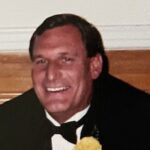 Michael D. Worth, 68, died peacefully on July 5, 2026 at the Mertens House in Woodstock.
Michael was born April 17, 1958 in Windsor, Vt., the son of Gordon K. and Teresa Berry Worth.
Michael was a graduate of Woodstock Union High School Class of 1976. Michael was a three-sport varsity athlete at WUHS, participating in football, basketball, and baseball. Michael continued playing basketball with the Woodstock Rec Summer League for a number of years.
Michael moved to California, where he spent 28 years enjoying the west coast lifestyle. He loved the climate and the ocean that allowed him to enjoy both golf and wave running. He returned home to Woodstock to be close to family and old friends. He will be remembered for his infectious smile, great humor, and being a good friend.
Michael is survived by his brother Jim, his sister Michelle (Dave), many nieces, nephews, and cousins. He is predeceased by his parents Gordon and Teresa, and spouse Theresa.
A gathering to celebrate Michael’s life will be held on Saturday, July 18 at The Thompson senior center from 2-4 p.m. A private burial will be held at a later date in the Baker Hill Cemetery in Bridgewater Center.
Memorial donations may be made to the Thompson Senior Center, 99 Senior Lane, Woodstock, Vermont 05091.
An online guestbook can be found at cabotfh.com.
July 7
3:08 pm
Larry Morrison, 79
 Larry Morrison, 79, of Barnard, died peacefully Sunday morning, June 28, 2026 at Gifford Medical Center in Randolph, surrounded by love.
Larry was born on Oct. 23, 1946 in North Adams, Massachusetts, to Howard and Audrey Pierson Morrison. Along with his seven brothers, he grew up in South Williamstown, Mass. He graduated from Mt. Greylock High School in the Class of 1964 and then attended the Charles H. McCann Technical School, completing an apprenticeship program for General Electric. This led to a 40 year career with General Electric, General Dynamics, and Lockheed Martin, first as a toolmaker, and then as a Numerical Control Programmer, writing computer programs to create tools for manufacturing blades for steam turbines.
In 1967, he married Kathleen Klahn and together they raised their two children, Kellie and David. Kathy passed away in 1995.
In 1997, Larry married Nancy Campbell and due to his work for General Electric they moved from Williamstown first to Burnt Hills, NY and then to Bangor, ME. When he retired in 2006, they moved to Barnard.
Larry was an adventurer. He loved hiking, camping, and walks on the beach. He and Nancy took two cross country motorcycle trips from Barnard to Alaska and back. In 2014 he discovered sailing with friends, snorkeling with sea turtles in Culebra and self-piloted canal boat trips in France, Germany, and Canada with friends.
He enjoyed helping others and used his self-taught construction skills to volunteer with Habitat for Humanity. He and Nancy also volunteered at the Thompson Senior Center in Woodstock, delivering Meals and Wheels.
Larry was predeceased by his parents, his first wife Kathy, brothers Bob, Ward and Wayne, and sister-in-law Sharon. He is survived by his wife of 29 years, Nancy Campbell Morrison; his children Kellie and David Morrison; grandchildren Bryce, Torey, Sam, Abby, and Luke; his brothers Russell, Neil, Tom and Brad; his sisters-in-law Carol, Maura, Clare, Dale and Cathy; his many nieces and nephews; and his many dear and loving friends.
In accordance with Larry’s wishes, there will be no funeral. He wanted his friends and family to gather and share memories and refreshments. A celebration of Larry’s life will be held at The Thompson senior center in Woodstock on Saturday, Aug. 22, starting at noon with a time for remembrances beginning at 12:30 p.m.
Donations in Larry’s name may be made to the Thompson Senior Center, 99 Senior Lane, Woodstock, VT 05091.
An online guestbook can be found at cabotfh.com.
July 7
3:04 pm
Harold Tilton “Scooter” Buck, Jr., 89
Harold Tilton “Scooter” Buck, Jr., 89, of Hinsonton died Monday, June 29, 2026 at his residence in Hinsonton.
At the request of Mr. Buck, no services will be held. His cremated remains will be placed in the family plot in the Bridgewater Corners Cemetery in Bridgewater Corners.
Born November 23, 1936 in Atlanta, Ga., Mr. Buck was the son of the late Harold Tilton Buck, Sr. and Katherine Gober Buck. He was an outstanding athlete at Pompano Beach High School in Broward County, Fla., where he earned all-state basketball recognition and also played basketball and tennis in college. He was a veteran of the United States Marine Corp. Mr. Buck was a retired school principal and an award winning artist. He was a member of Bridgewater Congregational Community Church of Bridgewater, and attended Burns Memorial Community Church of Cotton, Ga.
Survivors include his wife of 36 years, his cheerleader, Grace Hinson Buck of Hinsonton; two sons, Hal Buck and Rob Buck; two daughters, Sara Redmond and Katie Mitchell; two step-sons, David Ernest Green and Timothy Neil Green; seven grandchildren, Justin, Emily, Jack, Hannah, Molly, Riley, Cody; six great-grandchildren.
Memorials may be made to Burns Memorial Community Church, 4551 Stagecoach Rd, Meigs, GA 31765 or Bridgewater Congregational Community Church, PO Box 4, Bridgewater, VT 05034.
Parker-Bramlett Funeral Home is in charge of arrangements.
To sign the online guest registry, visit our website at parkerbramlett.com.
Annual Appeal
September 25
6:55 am
We’ll be your eyes and ears, if you’ll have our back
By Dan Cotter, Publisher
Well, my friends, this is my fourth and final article of our 2025 annual appeal.
Once again, this year, it’s been a privilege to talk directly with you about the mission we’re on at the Vermont Standard and the difficult challenges we face — to ask if you’ll please consider donating to the Woodstock Region Journalism Foundation in support of our efforts to connect our community and keep you informed on issues of public importance.
 Today, the main thing I want you to know is that we are proud to work for you.
We know you’re counting on us to be your eyes and ears — filling you in about local government actions that affect you, about local crime, about court cases playing out here, about notable news items and occurrences, the accomplishments of our neighbors and local youth, about developments at our schools, churches, businesses, and charitable or civic organizations, about the happenings and things to do in the local area, and lots more.
We are the one and only news source that’s entirely focused on our area; reporting news that’s primarily of interest right here. Our work — week in and week out — is entirely dedicated to the welfare of this community.
That’s the way it’s been here for 172 years. And Phil Camp and I and our small team are now trying to produce a 2025 version of the Vermont Standard that’s the best it has ever been in the paper’s long history.
The Standard is for you. It exists simply to benefit you and your neighbors. We regard this responsibility and the trust you place in us as a badge of honor. We pledge to give it our best. All we’ve got.
As I’ve explained before, the financial pressures we face are intense. And, tragically, various powers that be are trying to exert additional pressure in a sad attempt to undermine the press. By extension, their actions undermine you, the public. That’s nothing new, really, but it’s pretty acute right now. Shame on them.
However, with your donations to keep us afloat, we’re hanging in there, staying strong and getting stronger. We are continuing to work, not only on improving this week’s Vermont Standard, but next month’s and next year’s too, as we attempt to set things up so we can produce high-quality local journalism for the long term.
We’ll make sure your gift is put to good use as a worthwhile investment in one of the key components of the critical infrastructure that underpins this community.
As a citizen, it’s essential for you to be well-informed. That’s the only way we can have a functioning local democracy and a lively, connected community. As your eyes and ears, we’ll continue to follow the news closely and report it to you in new, better, and more engaging ways as time goes on.
We hope to make you proud as we strive to do the best community journalism in the country. We believe that’s a realistic goal. This weekend — for the ninth time in the last twelve years — the Standard will once again be a finalist for the honor of being named New England Weekly Newspaper of the Year.
When it comes to journalism, we believe you deserve the absolute best.
We are deeply appreciative of any financial help you can offer in this year’s 2025 annual appeal. In fact, if you’re interested, Phil Camp and I would be very grateful for an opportunity to meet with you in person to talk more about what’s needed and our plans. Please don’t hesitate to contact us at [email protected] or 802-457-1313.
Also — very importantly — if you have a family foundation, please consider adding the Woodstock Region Journalism Foundation (EIN: 93-3287932) to the worthwhile causes you regularly support. We’ll be deeply indebted to you.
The Woodstock Region Journalism Foundation is a public charity, so your gift will be fully tax-deductible.
If you’re willing to make a tax-deductible donation to our 2025 Annual Appeal, please send a check to PO Box 88, Woodstock, VT 05091, or go to our Vermont Standard THIS WEEK website at thevermontstandard.com to make a contribution with your credit card. Be sure to make your check out to the “Woodstock Region Journalism Foundation.”
September 17
4:15 pm
Connection matters: Long live the Standard’s stories that connect us
By Dan Cotter, Publisher
Lord knows, there are lots of fascinating people in our community.
At times, it seems as if every person you meet here in the course of a day is even more interesting than the last one. Sometimes, I marvel at how in the world all these wonderful and impressive folks are either from here or ended up here, in this little corner of Vermont.
Of course, I’m lucky. I get to participate in our story planning meetings at the Standard each week to decide who and what we’re going to write about next. Beyond the breaking news, what feature stories should we write – about which people, which organizations, which businesses?
It’s a joy.
There are always plenty of nominations. And then, even though you think you pretty well know who someone is or what an organization does and stands for, our reporter does a deep dive and provides new insight about them or their work or their cause in an account that’s simply breathtaking. Who knew? Right here among us!
I often refer to the Vermont Standard as a kind of “glue” for our community. It’s a paper everyone can turn to in order to stay informed about the local news — the goings-on, the things to do. Something to look forward to each week to catch up on the latest. A common experience shared by those who live here or care about this place.
But maybe the best part about the Standard is the way it enables us to connect as a community. The way it helps us get to know each other better by introducing us to that really interesting person who lives next door (sometimes literally). And I’ve found that typically the more impressive people are, the less likely they are to talk about themselves. They’re too modest. So, it takes a nosy reporter to get them to tell their full story.
And the same goes for some of the incredible organizations in the area, including charities, nonprofits, schools, churches, arts organizations, libraries, history centers, and many more. They aren’t always focused on touting or telling their story – about what they do, who they help, what they accomplish. Often, they toil away under the radar. But the Standard is eager to bring their story to the public’s attention. We want to shine a spotlight, applaud their work, and make the folks who might decide to join or support them aware of them.
Soon, we’ll be bringing you those kinds of stories on video too, as we roll out our Headliners and Inside Scoop programs this fall.
The bottom line is that living in a community is much more fulfilling for most of us when we get to know more about the ordinary people among us, who are doing some pretty extraordinary things. Reading about them and their aspirations and accomplishments in the Standard is fun, and, on occasion, when those stories also explain their struggles and failures, their resilience and ultimate triumphs, it can be touching to read, inspiring even.
These stories help us all feel a deeper sense of kinship with the people and organizations in our midst. They connect us and make us feel that we all truly belong to this beautiful community.
As I said, being this glue that strengthens our connection? It’s a joy.
We are deeply appreciative of any financial help you can offer in this year’s 2025 annual appeal. Our effort to preserve quality journalism for our community is quite urgent, my friends. And Phil Camp and I would be very grateful for an opportunity to meet with you to talk more about what’s needed and our plans. Please don’t hesitate to contact us at [email protected] or (802) 457-1313.
Also, if you have a family foundation, please consider adding the Woodstock Region Journalism Foundation (EIN: 93-3287932) to the worthwhile causes you regularly support.
The Woodstock Region Journalism Foundation is a public charity so your gift will be fully tax-deductible.
Your donation will be utilized in the form of project grants to support the Vermont Standard’s mission to inform, connect, and educate our community on issues of public importance.
If you’re willing to make a tax-deductible donation to our 2025 Annual Appeal, please send a check to PO Box 88, Woodstock, VT 05091, or go to our Vermont Standard THIS WEEK website at www.thevermontstandard.com to make a contribution with your credit card. Be sure to make your check out to the “Woodstock Region Journalism Foundation.”
September 11
6:55 am
Our survival is necessary but not sufficient
By Dan Cotter, Publisher
For the past 15-20 years, most local newspapers have been trying to “do more with less” in an effort to survive. And, of course, since that’s not a good long-term strategy, it has put our industry into a slow death spiral.
America has lost 3,200 of its newspapers in that same period of time, and currently, an average of more than two per week go out of business. Hundreds more papers are on life support, as they try to hang on by cutting staff, cutting pages, cutting the frequency of their publishing days, and eliminating their print editions. In their resulting emaciated state, those papers certainly can’t serve the need for local news and information in their communities.
Those withered newspapers are called “ghost papers,” because they are hollowed out shells of their former selves. Technically, they still exist. They continue to survive. But the communities counting on them? Well, they can no longer really count on them.
The handful of hedge funds and corporate raiders that bought up so many of our nation’s newspapers and ruined them wrote the playbook. In their effort to “rightsize” (meaning to dramatically downsize…) their papers in the face of diminishing advertising revenue, they chopped the expenses. Severely.
For newspapers, the primary expense is paying the people who work there. After many rounds of staff cuts, those papers barely cover any news at all, because they no longer have enough people to do it.
And as many of the small independent papers – like the Standard – encountered those same advertising revenue headwinds, lacking a better plan, they began following the same playbook. Consequently, in their efforts to survive, they now f ind themselves in that same never-ending spiral of cost-cutting.
Also, newspapers in that ragged state aren’t able to do the type of development work required to create a sustainable path for the future. In order to survive beyond just this week or this year, news organizations must create new services and revenue streams that will support them long-term. To do that takes time, thought, experimentation, risk-taking, and perseverance.
The beleaguered staff that’s left at most newspapers today simply lacks the energy for that.
“Doing more with less” (and less, and less…) was originally supposed to be a stopgap measure to buy time for newspapers to get their feet under them so they could forge a path to sustainability. Sadly, though, for most, it’s simply become standard operating procedure.
Fortunately, for our community here, the Vermont Standard has not followed that all too popular “survivor” playbook. We’ve never wanted to preside over a slow death march, just to be able to say we’re still publishing, but, in fact, failing to serve the very real need for local news, information, and connection in this community.
Thanks to your financial support, we’ve been able to go another way. Instead of doing more with less, we realize that we – and all local news organizations, especially in today’s political climate – just need to do more. Much more. And while doing that, we also need to create a sustainable path forward so we can live on to serve this community in even better ways for many more years.
Our efforts to survive are actually just the first step towards our real intention, which is to thrive.
In fact, with your help, we’ve upgraded our staff and improved our publication in recent years. The team we have reporting local news is now stronger than ever. They have a good deal of talent and a whole lot of heart, working for ridiculously low wages at this frugal newspaper, yet fueled by such a worthy mission. At the Standard, we haven’t forgotten why we exist in the first place. We are striving to provide wall-to-wall coverage of a steady stream of complex stories that are of great interest and importance to this community we serve.
We’ve also enhanced the look, feel, and utility of our publications.
And we’ve expanded our digital news and information products – we are doing more and more online programming with them. This fall, we are introducing our new series of “Headliners” interviews with local newsmakers that you’ll be able to view on our Vermont Standard THIS WEEK website. Also, we’re introducing a new show called “Inside Scoop”, which will give you an in-depth, insider look at the goings-on at many of the businesses and organizations that make our community so special.
At the Standard, we are trying to save a real newspaper that offers the powerful local journalism our community needs to function properly. Not a ghost paper. The Standard has to be good enough to get the job done now and survive in the long run. “Right-sizing” here does not mean a diminished publication that’s essentially worthless, as it does in so many communities throughout our nation. Here, it means being just big enough to provide the essential local journalism that contributes mightily to the quality of life in our community, and break even.
That’s the kind of Vermont Standard we are trying so hard to preserve, while setting things up so we can provide the quality local journalism our community needs well into the future.
I sincerely hope you’ll join us on this very important mission.
As we begin this year’s 2025 annual appeal, we are deeply appreciative of any financial help you can give us. Our mission is quite urgent, of course, and Phil Camp and I would be very grateful for an opportunity to meet with you to talk more about what’s needed and our plans. Please don’t hesitate to contact us at [email protected] or (802) 457-1313.
Also, if you have a family foundation, please consider adding the Woodstock Region Journalism Foundation (EIN: 933287932) to the worthwhile causes you regularly support.
The Woodstock Region Journalism Foundation is a public charity so your gift will be fully tax-deductible.
Your donation will be utilized in the form of project grants to support the Vermont Standard’s mission to inform, connect, and educate our community on issues of public importance.
If you’re willing to make a tax-deductible donation to our 2025 Annual Appeal, please send a check to PO Box 88, Woodstock, VT 05091, or go to our Vermont Standard THIS WEEK website at thevermontstandard.com to make a contribution with your credit card. Be sure to make your check out to the “Woodstock Region Journalism Foundation.”
September 4
6:56 am
Stewarding your paper in these difficult times is the honor of a lifetime
By Dan Cotter, publisher
It’s been said that there are very few things in life that you can always count on. But there are indeed a few, and I believe you’re holding one of them in your hands right now (or perhaps reading it on a screen).
For 172 years, the people of Woodstock, Hartland, Pomfret, Barnard, Bridgewater, Reading, West Windsor, Quechee, Plymouth, and the surrounding towns have counted on the Vermont Standard to keep watch on things in order to keep them informed, empowered, and connected. Our columnist, Dave Doubleday, replays some of the top stories of the day that took place 10, 20, 50, 75, or 100 years ago in each installment of his brilliant “Olde Woodstock” feature. It’s amazing and quite reassuring that people here were reading this same paper all those years ago simply to find out what’s happening.
Just as you are today.
All this time, citizens – informed by the Standard — were able to fully participate in their local democracy as our area progressed to the state it’s in today. What a huge responsibility it must have been, and still is today, to produce this newspaper each week. To prepare a quality news report to help readers experience and enjoy day-to-day life here and make good decisions for their community.
 It’s the honor of a lifetime to be entrusted with this responsibility. The Standard has a small crew of talented, fair-minded, and underpaid journalists doggedly pursuing their mission week in and week out — trying to produce an interesting local news report that will inform, educate, and entertain the people who live here. It’s a “weekly miracle.” We start with a blank page each Wednesday afternoon, and we work tirelessly to pursue stories and produce the very best finished publication we can by the following Wednesday, so that it will be in your mailbox or at the store for you on Thursday.
In the century and a three-quarters that this paper has existed, this is our time, and our team is attempting to make a proud contribution to its legacy.
Ours certainly isn’t the easiest time to be a journalist in the Standard’s and our community’s history. This is a time of transition, when traditional forms of funding for local journalism have waned. Now, we have not only to strive to produce an excellent news report each week, but we also have to hold our breath that we’ll even be able to stay afloat.
An average of more than two newspapers fold in the U.S. each week (3,200 have vanished in the past twenty years!), leaving their communities without this kind of “glue” – without the common experience of reading in print or online about issues that affect them and their neighbors and a comprehensive set of facts for all to know about what’s happening in their local area each week.
Making matters worse, hundreds of other towns throughout the nation now only have a “ghost newspaper” that is so financially compromised it can barely cover any local news in its meager news product.
Some people – perhaps taking a page from the playbook being used at the national level – might prefer that ours was a weaker, sleepier paper and that they could exert some kind of pressure to compromise the Standard’s coverage.
But they’re mistaken. It hasn’t worked in 172 years, and we won’t let it happen now. Count on it.
We’ve had many complex (and interesting!) local stories to cover just in this past year — news that people here are counting on us to follow and explain. From the Woodstock Foundation lawsuit, to school policy, budget and reorganization issues, to Peace Field Farm, to the water company purchase, to short-term rental ordinances, to the police chief demotion, to the proposed cell phone tower and farm outlet store in Hartland, to the ECFiber case, to the ongoing housing and child care shortages, to the impact of federal funding cuts on local organizations. And we’ve had many milestones and achievements to celebrate, from our football state championship team, to our local priest’s 50th anniversary of his ordination, to the resurgence of Bookstock, to local artists and authors who released their latest works, to this year’s graduates, to a pair of brothers who achieved the rank of Eagle Scout, to the dedication and resilience shown by those remarkable protesters in Woodstock. Even the announcement of plans for a new performing arts center, and the sighting of low-flying military planes over Woodstock. Those stories aren’t easy or inexpensive to cover, but like the journalists at the Standard who were our predecessors throughout those many, many years, it’s our solemn responsibility to inform the public about the public’s business, the very best we can.
Indeed, we can, primarily because we now have the support of hundreds of residents and readers who truly understand and value what quality local journalism does — and has always done — for our community here. They respond to our annual appeal each year. They keep us afloat. They keep us encouraged. They harden our resolve to try ever harder to serve this community and this local democracy. We count on all of you.
Oftentimes, I’ve asked individual donors, “What can we possibly do to thank you for your generosity?” And, to a person, they always say, “Just keep putting out a darn good newspaper.”
In appreciation for you, our friends, the Standard has only one single objective and guiding light going forward: to keep trying to put out a better and better paper each week in service to this community.
You can count on us.
As we begin this year’s annual appeal, we are deeply appreciative of any financial help you can give us. Our mission is quite urgent, of course, and Phil Camp and I would be very grateful for an opportunity to meet with you to talk more about what’s needed and our plans. Please don’t hesitate to contact us at [email protected] or (802) 457-1313.
We sincerely hope you’ll join us in our mission by contributing to this year’s 2025 annual appeal.
Also, if you have a family foundation, please consider adding the Woodstock Region Journalism Foundation (EIN: 93-3287932) to the worthwhile causes you regularly support.
The Woodstock Region Journalism Foundation is a public charity so your gift will be fully tax-deductible.
Your donation will be utilized in the form of project grants to support the Vermont Standard’s mission to inform, connect, and educate our community on issues of public importance.
If you’re willing to make a tax-deductible donation to our 2025 Annual Appeal, please send a check to PO Box 88, Woodstock, VT 05091, or go to our Vermont Standard THIS WEEK website at www.thevermontstandard.com to make a contribution with your credit card. Be sure to make your check out to the “Woodstock Region Journalism Foundation.”
August 29
5:05 am
Hard to imagine Woodstock without the Standard
“View From Here”
By Sandy Gilmour, Woodstock resident
If you are reading this column right now, that’s good news for the community. It means you probably paid for this paper, hard copy or online, maybe even made a donation to it, and value its contribution to our lives in Woodstock and surrounding areas. We are so fortunate to have the Vermont Standard week in and week out. For years, small-town dailies and weeklies have been closing their doors, leaving communities without a soul. Papers like the Standard are dying off at the rate of two per week across America.
Such towns are called “news deserts.” Imagine weeks, months and years going by with no professional reporting on selectboards, trustees, school boards, taxes and roads. Zero stories about public school events, sports, student accomplishments, obituaries, gardening tips, neighborly cooking advice, local history, and no reports from towns from Brownsville to Pomfret.
We would know next to nothing about the interminable Peace Field Farm restaurant delay, the Ottauquechee Trail head fiasco, the high-stakes Woodstock Foundation controversy and the fatal shooting off Central Street, including the bravery of Woodstock Police Sgt. Joe Swanson. In my view, these stories have been really well reported.
To not get these stories delivered to us every week would be a news desert right in verdant Woodstock, for sure, a gaping hole left to be filled by rumor and mis- and dis-information, the precursors of community dissolution. So we are blessed indeed to have had the Vermont Standard around — nonstop — since 1853, and owned by beloved Woodstocker Phil Camp, now 87, since 1981.
But as Mr. Camp has pointed out many times over the years, the paper’s solvency hangs on a thread and now more than ever. In hundreds of towns across America, owners, beleaguered by losing subscribers and advertising to social media, simply folded or sold out to hedge funds and private equity firms, whose investors are bereft of community values. Not Phil Camp. He has always said, “I never sold out. I’m never giving up.” He made up for past deficits (difference between expenses, like staff, and income from subscriptions and ads) out of company savings from better times, week after week. He stayed with it after being flooded out by Tropical Storm Irene in 2011 and being burned out by the Central Street fire of 2018 (taking out his camera and snapping photos of the flames and rubble).
The paper was in dire straits when COVID hit, saved by the forgiven federal PPP (Paycheck Protection Program) loans through 2021, when the largesse ended. Then beginning in January 2022, the community stepped up, responding to a fundraising appeal. I was rather stunned to learn from the Standard’s publisher, Dan Cotter, that the paper’s annual shortfall of $150,000-$200,000 is being covered by donations from local Woodstock residents. There are many (and appreciated) donations in the $50-$100-$200 range, but really heavy lifting is being done by donors of means who, Mr. Cotter says, highly value the contribution local journalism makes to communities. Several of these more-than-generous and anonymous donors contribute $20-25,000 and more — each — and, Mr. Cotter says, without any hint of trying to influence coverage. Without them, surely there would be no Vermont Standard in the mailbox or online, just the unreliable grapevine. At the same time, the paper is moving to create other revenue streams, including an online advertising app for Woodstock happenings and a magazine, in addition to improving thevermontstandard.com website for go-to news.
Still, the operation is bare bones. It seems to me a miracle the paper “hits the streets” without fail every Thursday with some pretty good and important stories that we need to know about, and many features that are good to know about. And there are just two, count them, two, full-time staffers who report stories: the seasoned and prolific Tom Ayres, and Tess Hunter, who is also the managing editor. Ms. Hunter says reporter staffing is the big issue; she has on hand freelance contract reporters that can be assigned to stories if they are available and if they want to spend the evening at yet another unexciting if important selectboard meeting. “It’s a constant juggling act,” Ms. Hunter told me, “between finding the right person for the story and just getting people to say ‘yes.’” Still, she is committed, saying, “Without us making the attempt, there would be no common base of understanding and little sense of the community spirit of the area or the hard news happening within it.”
Volunteer contributors are crucial; regular community writers like Jennifer Falvey (insightful musings on life) and Kurt Stauder (pointed political observations) are popular. Mary Lee Camp’s business column is relentlessly informative.
Other key staff are listed in the box below — lean and spare!
Publisher and editorial content director Dan Cotter, 64, hired by Mr. Camp in 2018 after years of informal consulting for the Standard, is not a household name in Woodstock, though he is hands-on every issue. He owns a condo in the area and is here about half the month, returning to his home and wife in Chicago for the remainder. He has decades in the industry as an executive and consultant, was head of the New England Newspaper and Press Association, and takes a no-nonsense hard line on newspaper independence and objectivity. It’s an unusual situation but Mr. Camp, still the president of the company, has total confidence in Mr. Cotter and has turned over the Vermont Standard, its operation, assets and its future, to his close friend. Mr. Camp has indeed not “given up,” but hopes to ensure his dear newspaper’s future with this arrangement.
So where does the Standard go now? Around the country, journalists are reinventing newspapers and online reporting. The most promising seems to be the non-profit model, where deductible contributions from community-minded supporters can be made even as the publication accepts subscription fees and what advertising there is left. There are indications that the Standard is moving in this direction, and the sooner the better, in my view. When I pressed Publisher Cotter on the issue, he responded with this very encouraging comment:
“In the past couple of years, members of the community have literally kept the Standard alive with their donations — and a handful of them have given very substantial sums, even without the benefit of a tax break. That’s how much they value the role our local journalism plays in the quality of life in our area. We are working now to put the paper on a path to where donors could indeed have a tax benefit. For it is essential to our democracy and our own survival that we have the financial support we need from the community to maintain a news organization — modest as it is — that’s capable of producing good local journalism that adequately informs our citizens.”
I can’t imagine Woodstock without the Vermont Standard. The new business model provides great hope the paper will not only survive but as a Woodstock-based non-profit, continue to expand coverage to benefit all of us in this great community.
Note: This (unpaid) column originated with me alone!
Sandy Gilmour is a retired NBC News correspondent who lives in Woodstock.
August 29
5:00 am